Sorting Precious Administrative Documents During a Major Clean-Out
Preserving people’s legal rights and identity amid the chaos
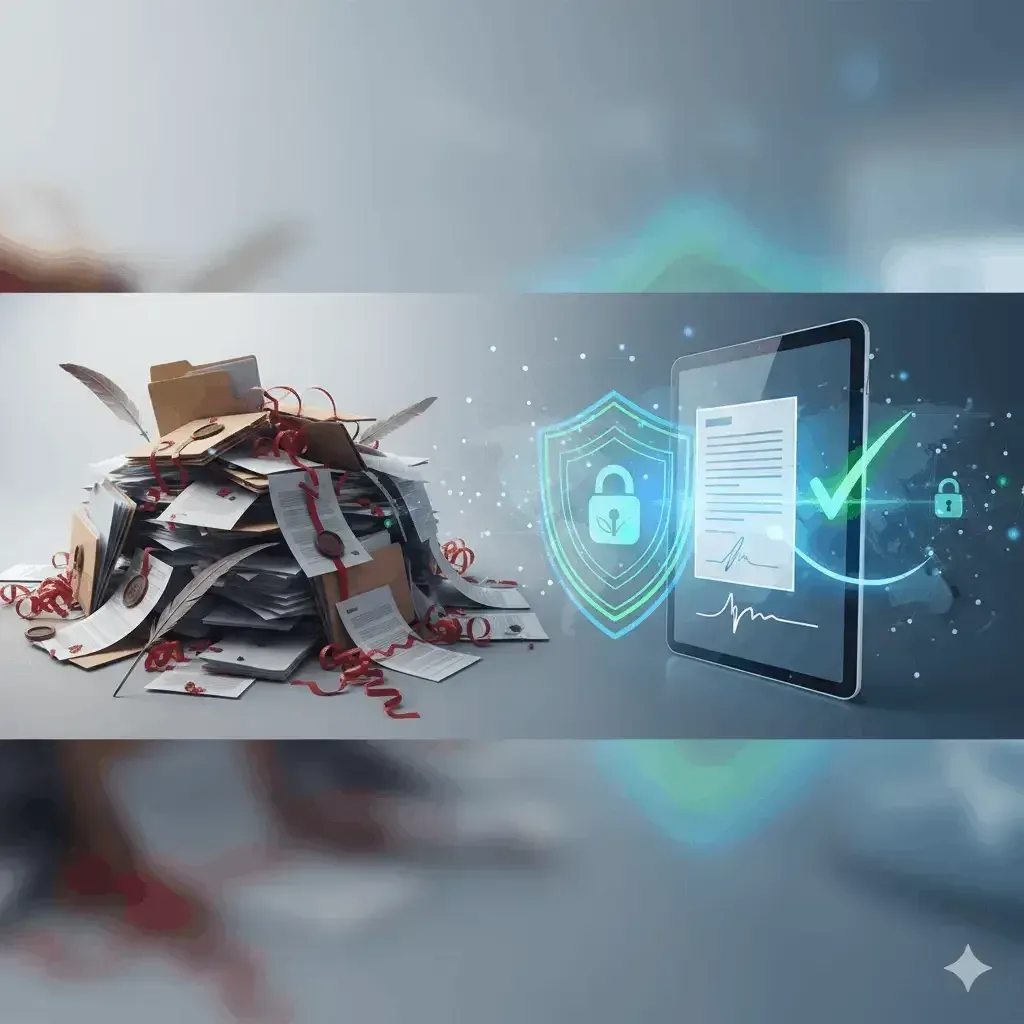
Clearing out an unsanitary home doesn’t mean throwing everything into the skip. At the heart of stage 2 and 3 Diogenes accumulations often lie the key pieces of a person’s administrative life: birth certificates, property deeds, ID cards or pension letters. The non-profit Cœur Historique applies a rigorous, hands-on sorting method to prevent the loss of irreplaceable documents that are essential to the beneficiary’s reintegration.
The scattering of crucial administrative papers
The recurring problem on our sanitation sites across the province of Liège is the total burial of official papers. Mixed in with advertising flyers, newspapers years old and household waste, vital documents become invisible. The occupant, often overwhelmed by the situation, long ago lost track of their bank passbooks or health insurance papers. Blindly discarding this mass of paper without prior checking condemns the person to an almost total administrative and legal death.
The collapse of organisational and filing abilities
The primary cause of this situation lies in the process of mental disorganisation that accompanies Diogenes syndrome or severe depression. Sorting the mail stops from one day to the next. Envelopes pile up on tables, then slide to the floor, where they get trodden on and buried under further layers of debris. Over time, this build-up makes access to one’s rights impossible: the beneficiary can no longer respond to administrative bodies, which leads to their benefits or health insurance being cut off.
Social exclusion and the loss of fundamental rights
The consequences of inadvertently destroying these administrative papers are dramatic. Without identity documents or proof of income, the beneficiary finds themselves unable to renew their social rights, receive their pension, or get proper treatment in Liège hospitals. What’s more, the loss of property deeds or lease agreements severely complicates the work of guardians, social workers or lawyers tasked with legally protecting the person in distress.
The manual sifting method and safeguard boxes
The solution put in place by Cœur Historique’s volunteers is a systematic filtering process known as “sifting.” No paper bag is thrown out without first being opened and inspected. A dedicated sorting table is set up outside or in a healthy area of the home. All official documents, family photos, jewellery and precious keepsakes are extracted and placed in an airtight “safeguard box.” This secure box is then handed in person to the beneficiary or their legal guardian, guaranteeing the continuity of their rights and their history.
📋 In summary
| Documents to Safeguard | Impact of Loss | Cœur Historique’s Action |
|---|---|---|
| Identity & Civil Status | Loss of civic rights, welfare office (CPAS) blockage | Immediate extraction, cleaning and placement in a protective sleeve |
| Deeds & Contracts | Eviction, serious financial disputes | Centralisation in the administrative safeguard box |
| Photos & Keepsakes | Permanent loss of family memory | Setting aside sentimental items for psychological rebuilding |